Picture the absolute dread of receiving a subpoena from a foreign government demanding access to your most sensitive customer databases. You immediately call your tech team, only to discover your hyper-scale cloud provider has already complied because your data resided on a server in their jurisdiction. Your sovereignty was completely surrendered the moment you signed their labyrinthine terms of service.
We blindly handed over the keys to our digital kingdoms to an oligopoly of massive tech corporations. For years, the convenience of infinite scalability blinded us to the creeping loss of actual ownership. We essentially became digital sharecroppers, renting space on someone else’s silicon while crossing our fingers against geopolitical shifts.
That blind trust is rapidly evaporating as companies realize the immense vulnerabilities of centralized architectures. Executives are suddenly waking up to the reality that software encryption is entirely meaningless if you do not control the physical substrate processing the algorithms. You cannot claim true data privacy if you are fundamentally reliant on an external entity’s physical machines.
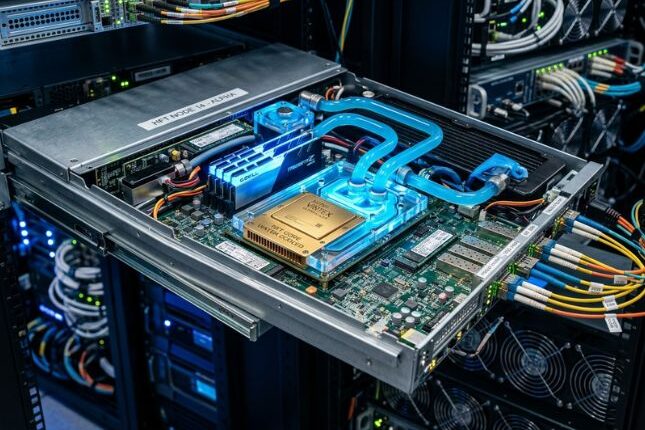
This profound realization is driving the aggressive emergence of Cloud 3.0 hardware. We are shifting away from sprawling, anonymous server farms toward heavily fortified, decentralized physical architectures. If you want to future-proof your digital assets, you must fundamentally rethink the bare metal running your operations.
The Physical Reality of Sovereign Cloud Infrastructure
Escaping the Geopolitical Crossfire
The concept of the cloud used to be a nebulous, borderless utopia. Now, it is a highly contested battleground governed by rapidly mutating international privacy laws. Governments are actively weaponizing data, leaving businesses trapped in an impossible regulatory crossfire.
Consider a scenario I recently encountered while advising a logistics consortium that manages heavy cross-border commerce and daily freight traffic. They relied entirely on a massive public cloud to track rapid inventory shifts across international checkpoints. When new regional data privacy laws were abruptly enacted, their entire digital architecture became an immediate legal liability.
To keep their trucks moving legally, we had to drastically pivot their strategy. We essentially had to rip and replace their dependency with localized sovereign cloud infrastructure situated squarely on their side of the border. They needed absolute, unquestionable certainty regarding the physical zip code of their database servers.
Decentralization by Design
Building true sovereignty requires a massive departure from standard enterprise procurement strategies. You are no longer just buying compute cycles; you are investing in geopolitical risk mitigation. The hardware itself must be inherently designed for isolated execution and total geographic independence.
This means deploying silicon that absolutely refuses to phone home to a corporate mothership. If a vendor’s hardware requires a persistent internet connection to a centralized license server just to boot up, it is fundamentally incompatible with your sovereignty goals. True sovereignty demands machines that function autonomously, even if the surrounding internet infrastructure goes entirely dark.
Engineering Local-First Data Centers
The Rise of the Micro-Data Fortress
The era of the monolithic, million-square-foot server facility is slowly giving way to highly distributed architectures. We are witnessing the massive proliferation of local-first data centers designed to process critical workloads precisely where they are generated. This drastically reduces the physical distance your data travels, severely limiting its exposure to interception.
These facilities look vastly different from traditional enterprise environments. They are often modular, heavily ruggedized deployments sitting quietly in warehouse corners or discrete regional offices. They prioritize extreme physical security and self-contained cooling over sheer square footage.
Compute at the Ultimate Edge
To make this decentralized model work, manufacturers are completely reinventing edge servers. These are not stripped-down, underpowered machines; they are incredibly dense compute nodes packed with AI accelerators and massive storage arrays. They bring hyper-scale processing power directly into your physical facility.
By processing telemetry, financial transactions, or logistics data on-site, you drastically cut expensive bandwidth costs. More importantly, you create an insurmountable physical air gap between your core operations and the chaotic public internet. Hackers cannot easily exfiltrate what they physically cannot reach.
Mandating Ironclad Data Sovereignty Requirements
Hardware Security Modules (HSMs)
Compliance is no longer just a matter of adjusting software permissions and updating privacy policies. Meeting strict data sovereignty requirements demands verifiable, physical cryptographic boundaries. This is where specialized hardware becomes absolutely non-negotiable.
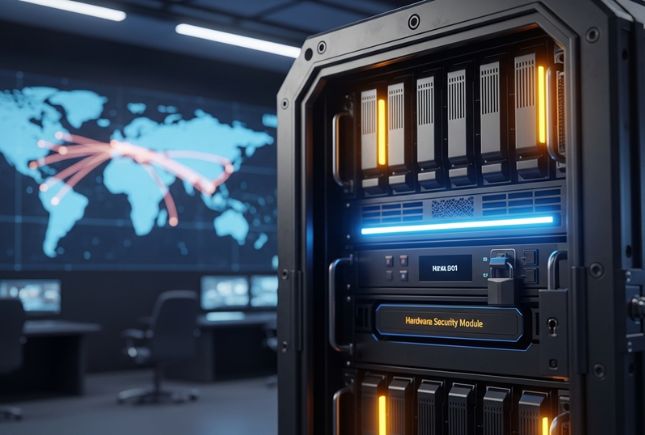
Hardware Security Modules (HSMs) are essentially digital vaults built directly into your server infrastructure. They physically generate, protect, and manage the cryptographic keys securing your entire network. Even if a highly sophisticated attacker breaches your software layer, the physical architecture of the HSM prevents them from extracting the actual encryption keys.
Trusted Execution Environments (TEEs)
We are also seeing massive investments in silicon-level confidential computing. Modern processors are now shipping with embedded Trusted Execution Environments (TEEs). These are physically isolated enclaves within the CPU itself that encrypt data exactly while it is being processed.
This is a monumental shift in how we handle active memory. Previously, data had to be briefly decrypted in RAM to be analyzed, creating a split-second window for advanced malware to strike. With a TEE, your data remains mathematically locked down from the moment it enters the physical chip until the moment it leaves.
The Strategic Shift to Smart Silicon
Offloading Security to Data Processing Units (DPUs)
If you want to maintain high performance while locking down your network, standard CPUs simply cannot handle the load. The sheer computational weight of running continuous, zero-trust encryption will severely throttle your business applications. The industry’s solution to this bottleneck is the rapid adoption of Data Processing Units (DPUs).
These specialized pieces of Cloud 3.0 hardware are essentially dedicated security processors sitting directly on your network interface cards. They completely offload the heavy lifting of packet inspection, firewall routing, and encryption away from your main processors. This allows your core servers to dedicate 100% of their power to running your actual business operations.
Eliminating the “Noisy Neighbor” Threat
DPUs also solve one of the most persistent vulnerabilities of virtualization: the noisy neighbor problem. When multiple virtual machines share a single physical server, malicious code can occasionally jump the hypervisor gap. By physically separating the infrastructure management layer from the application layer onto a DPU, you completely sever that attack vector.
This physical isolation is the absolute gold standard for sovereign operations. You gain the operational agility of a modern cloud environment with the impenetrable security of a dedicated, bare-metal server. It represents the perfect synthesis of performance and absolute control.
Reclaiming Your Digital Territory
We are standing at a critical juncture in the evolution of enterprise technology architectures. The convenient, centralized clouds that fueled the last decade of growth are simply too fragile and legally compromised to carry us forward safely. Relying on foreign servers to hold your most sensitive operational data is an existential risk you can no longer afford to ignore.
The pivot toward decentralized, strictly controlled bare metal is not a step backward into the dark ages of IT. It is a highly strategic maneuver to reclaim ownership of your digital destiny. Implementing robust, localized architectures gives you an incredible competitive advantage in an era defined by aggressive data harvesting.
Do not wait for a regulatory fine or a catastrophic breach to force your hand. Sit down with your infrastructure engineers this week and ruthlessly audit exactly where your most critical data physically resides. Start strategically migrating those workloads onto sovereign hardware architectures that you absolutely control.
Frequently Asked Questions
What exactly is Cloud 3.0 hardware? It refers to the next generation of physical server architecture designed specifically for decentralization, extreme physical security, and local control. It heavily utilizes custom silicon like DPUs and embedded hardware encryption to ensure data cannot be accessed by unauthorized external entities.
Why are local-first data centers becoming so popular?
They allow companies to process highly sensitive information on-site, eliminating the need to transmit vulnerable data across the public internet to centralized cloud providers. This ensures compliance with regional privacy laws and dramatically reduces latency for critical applications.
How does sovereign infrastructure protect my business from foreign laws?
By physically locating your servers within your own legal jurisdiction and maintaining absolute control over the encryption keys, you prevent foreign governments from legally compelling third-party cloud providers to hand over your data.
Is shifting to sovereign hardware more expensive than public cloud?
While the initial capital expenditure for the hardware is higher, the long-term operational costs are often lower because you eliminate exorbitant data egress fees charged by major cloud providers. Furthermore, the financial protection against regulatory fines and catastrophic data breaches makes it a highly cost-effective strategy.