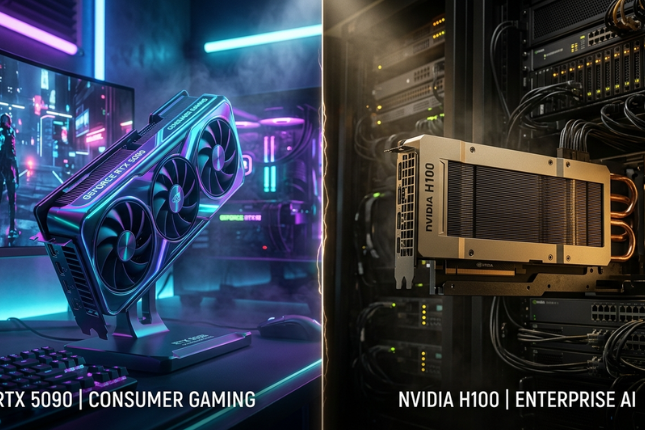
You’ve likely spent the last year hearing about the H100 as if it’s the holy grail of silicon. But in the breakneck world of AI, yesterday’s breakthrough is tomorrow’s bottleneck. While the industry scrambled to secure Hopper chips, Nvidia was already drafting a blueprint that shifts the entire paradigm of how we think about compute.
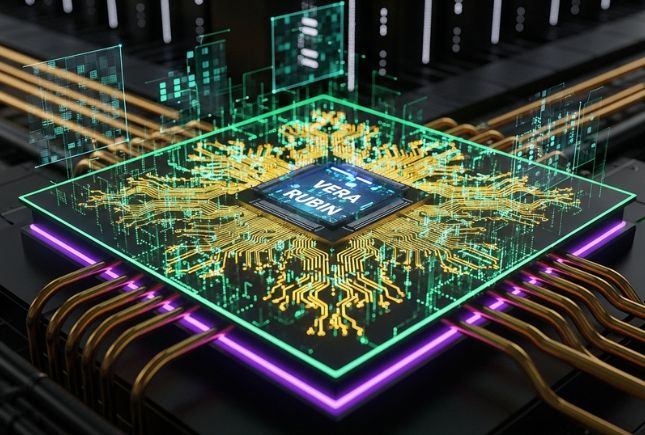
The transition to the Nvidia Vera Rubin architecture isn’t just a routine spec bump. We are moving away from simple “faster chips” and toward a unified supercomputing fabric. If you’ve felt the sting of rising inference costs or the frustration of massive models bottlenecked by memory bandwidth, this is the shift you’ve been waiting for.
The Shift from Brute Force to Architectural Elegance
For a long time, the industry’s secret to better AI was simply “more.” More transistors, more power, and more cooling. However, the Vera Rubin architecture marks a departure from that brute-force philosophy. By 2026, the challenge isn’t just training a model; it’s running it at scale without burning a hole through your balance sheet.
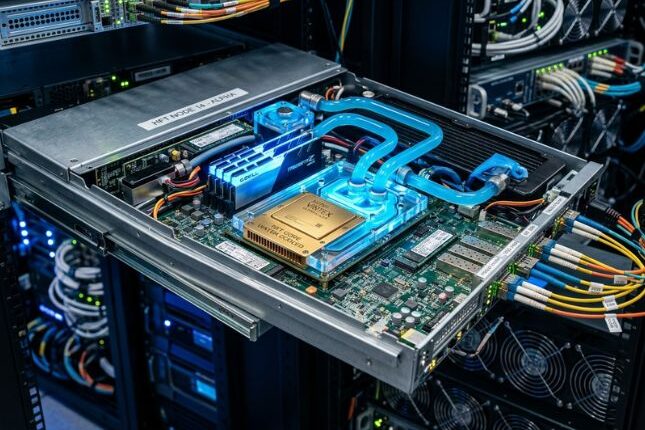
We’re seeing a move toward a holistic system where the GPU, CPU, and networking are essentially one organ. The integration of HBM4 (High Bandwidth Memory) is the real star here. It addresses the “memory wall” that has plagued developers for years, allowing for next-gen GPUs to breathe where previous generations would have choked.
Think of it like this: if the H100 was a high-performance sports car, Vera Rubin is a teleportation gate. It doesn’t just travel faster; it changes the geography of data movement entirely. We are looking at a future where latency is measured in whispers rather than milliseconds.
Revolutionizing Inference Performance for the Edge
Training gets all the headlines, but inference performance is where the money is won or lost. Most companies are realizing that deploying a model at scale is ten times more expensive than training it. This is where the Vera Rubin platform earns its keep.
The architecture is specifically tuned to handle the sparse, erratic workloads of real-time AI agents. We aren’t just talking about chatbots anymore. We’re talking about autonomous systems that need to make trillion-parameter decisions in a heartbeat. The efficiency gains here mean you can run larger models on smaller footprints.
From my perspective, the most “human” benefit of this tech is accessibility. When inference becomes cheap and fast, AI moves out of the data center and into your local devices. It’s the difference between a tool that “thinks” in the cloud and one that responds to you instantly, privately, and locally.
Why AI Supercomputing is Being Redefined
We have to stop looking at GPUs as individual cards. With Vera Rubin, Nvidia is pushing the concept of the “Data Center as a Unit.” The NVLink interconnects have reached a point where the distinction between one chip and the next is effectively gone.
This unified fabric is essential for AI supercomputing. When we build clusters using Vera Rubin, we aren’t just stacking boxes. We are creating a massive, distributed brain. This allows for “liquid” scaling, where resources can be reallocated dynamically based on the specific layer of the neural network being processed.
If you are an enterprise lead or a hardware enthusiast, the takeaway is clear. Investing in legacy infrastructure now is like buying a top-tier typewriter right before the word processor arrived. The leap in interconnect speeds alone justifies the migration for anyone serious about the next decade of Moore’s Law.
Practical Steps for the Rubin Era
How do you actually prepare for this? It’s not just about saving up your budget for the next procurement cycle. It’s about optimizing your software stack today to be ready for the massive parallelism of tomorrow.
- Audit your Data Pipelines:
- Ensure your data ingress can keep up with the processing speeds of HBM4-equipped hardware.
- Focus on Quantization:
- Rubin handles low-precision math with unprecedented efficiency. Start experimenting with FP4 and even lower formats now.
- Decentralize your Compute:
- Look into how Vera Rubin’s inference capabilities might allow you to move some workloads to the edge of your network.
We’ve seen cycles like this before, but the steepness of this particular curve is different. The companies that win won’t just have the most chips; they’ll have the most efficient architecture. It’s time to look past the H100 and start building for the Rubin reality.
FAQ
How does Vera Rubin differ from the Blackwell architecture?
While Blackwell focused on massive raw throughput and liquid cooling integration, Vera Rubin introduces HBM4 and a tighter integration with the Vera CPU. It is a more “mature” architecture focused on efficiency and massive-scale inference.
When will Nvidia Vera Rubin GPUs be available for enterprise?
Based on the current roadmap, we expect initial shipments to start hitting Tier-1 cloud providers by late 2025, with wider enterprise availability in early 2026.
Will I need to rewrite my CUDA code for Vera Rubin?
No, Nvidia maintains strict backward compatibility. However, to leverage the specific HBM4 and interconnect improvements, you will likely want to recompile using the latest versions of the Nvidia AI Enterprise stack.